Ginger paste is primarily made from fresh ginger through processes such as sorting, washing, peeling, crushing, and grinding. Depending on the intended product positioning, it can be produced with a coarser, granular texture or finely ground to achieve a smooth, uniform consistency.
In actual production, the formulations for ginger paste vary. Some products feature ginger as the primary ingredient to highlight its pungent, spicy flavor, while others incorporate vegetable oil, salt, acidity regulators, or other seasonings to enhance mouthfeel and storage stability. Consequently, factories must determine the subsequent processes—such as mixing, heating, filling, and sterilization—based on the specific product formulation.
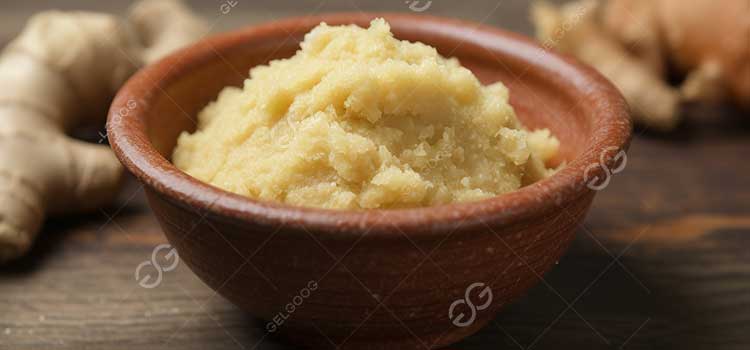
How to make ginger paste?
A complete ginger paste production line typically includes the following steps:
Raw material intake → Sorting → Washing → Peeling → Crushing → Grinding → Ingredient mixing → Filling → Sterilization → Cooling
As product formulations and production capacities vary by factory, the specific equipment configuration can be adjusted accordingly.
Ginger-garlic paste is another common product form in the production of ginger paste.
Both ginger and garlic possess distinct, pungent flavors; combining them creates a richer, complex flavor profile, making the paste suitable for marinating meat, use as a dipping sauce, and in food service processing.
The production process for ginger-garlic paste is essentially similar to that of ginger paste, though it requires the simultaneous pretreatment of both ginger and garlic.
A typical process flow can be outlined as follows:
Ginger selection and washing → peeling → cutting → grinding into paste
Simultaneously:
Garlic selection → peeling → washing → grinding into paste
Subsequently, the ginger and garlic pastes are added to a mixing tank in accordance with the product formula and thoroughly blended; this is followed by seasoning, heat treatment, filling, and further processing.For products with a high ratio of ginger to garlic, the factory must pay special attention to the particle size and moisture content of both raw materials. Significant disparities in the processed state of the ginger and garlic can lead to issues such as paste separation, uneven particle distribution, or inconsistent mouthfeel. Therefore, strict control over the condition of the raw materials and the mixing ratio is essential during production.