Ginger is a common and widely used crop, extensively used in cooking, seasoning, and food processing. However, fresh ginger has a high water content, generally around 80%–90%, and is prone to mold, rot, or sprouting if stored improperly, making it unsuitable for long-term preservation. Therefore, processing ginger into dried ginger or ginger slices is an important way to extend its shelf life and increase its added value.
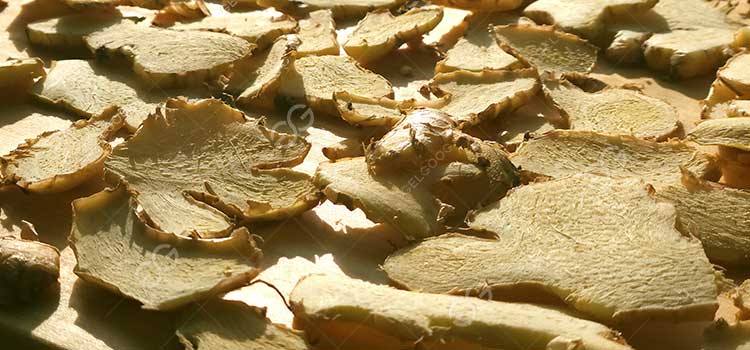
Drying is a common process in the deep processing of ginger. By removing most of the moisture from the ginger, drying effectively inhibits microbial growth, significantly extending the ginger’s shelf life and facilitating transportation, storage, and subsequent processing. So, how many hours to dehydrate ginger?
In actual production, the drying time for ginger is not fixed.
Drying whole pieces of ginger: approximately 24–48 hours
Drying sliced ginger: approximately 6–12 hours
It can be seen that slicing ginger before drying is a common practice in processing plants to significantly shorten drying time and improve production efficiency. Slicing greatly increases the contact area between the ginger and hot air, making it easier for moisture to evaporate, which not only shortens the drying time but also ensures more uniform drying of the finished product.
Besides whether or not the ginger is sliced, several other factors directly affect the drying time and final result of the ginger, including the following:
1. Ginger Slice Thickness
The thicker the ginger slice, the longer it takes for internal moisture to diffuse outwards. In industrial production, ginger slices are commonly 2–5 mm thick, balancing efficiency with product quality.
2. Drying Temperature
The commonly used drying temperature range is 50–70℃. If the temperature is too high, the surface of the ginger slices may dry too quickly, making it difficult for internal moisture to escape, and may even affect the color and flavor.
3. Initial Moisture Content and Freshness of Ginger
The moisture content of ginger varies depending on its origin, variety, and harvest time. Fresh ginger with a high moisture content requires a longer drying time.
4. Drying Equipment Types and Air Speed
Different types of drying equipment have significantly different efficiencies:
Hot air circulating dryer: Even heating, higher efficiency.
Continuous drying line: Suitable for large-scale production, stable drying time, high capacity.
5. Packing Thickness and Arrangement
During the drying process, if the ginger slices are stacked too thickly or placed too densely, it will affect air circulation, causing some areas to not dry properly, thus prolonging the overall drying time.For processing enterprises that want to increase production capacity, reduce energy consumption, and ensure product quality, choosing the right slicing process and professional drying equipment is key to shortening drying time and achieving large-scale production.