Ginger juice is a natural plant-based beverage and food ingredient produced from fresh ginger through a series of processes, including washing, peeling, crushing, juicing, sterilization, and bottling. With the ongoing development of the food and beverage industry, ginger juice is no longer limited to home cooking; it is now widely used in beverages, seasonings, food processing, health products, and more. So, what is the ginger juice production steps?
Industrial-scale ginger juice production typically employs continuous or semi-automated processing equipment.
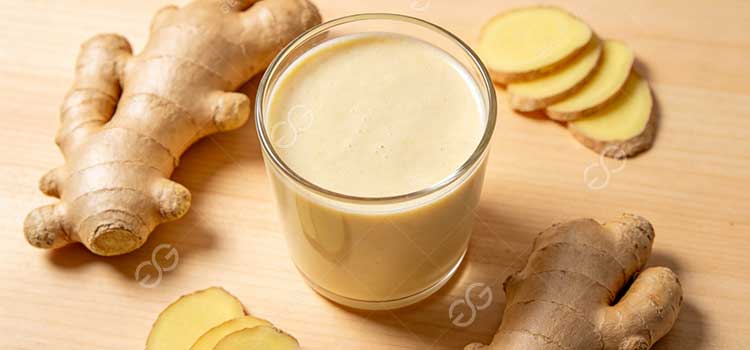
The basic production workflow is as follows:
Fresh ginger → washing → peeling → crushing → hydraulic juicing → filtration → sterilization → filling
Step 1: Washing and Peeling
The surface of the ginger is scrubbed using a combination of rotating brushes and water sprays, which removes firmly adhered dirt as well as the ginger skin.
Step 2: Ginger Crushing
Once peeled, the ginger enters a crusher, where it is broken down into smaller particles. The primary purpose of this crushing process is to disrupt the ginger’s tissue structure, facilitating the release of its internal juice and thereby improving the efficiency of the subsequent juicing stage.
Step 3. Hydraulic Juicing
Hydraulic juicing is a crucial stage in the production of ginger juice. The crushed ginger is fed into a hydraulic juicer, where a hydraulic system applies steady pressure to extract the juice from the ginger.
Step 4. Filtration
Ginger juice typically contains fibers, fine ginger pulp, and other suspended particles, which must be removed using filtration equipment.
Step 5. Pasteurization of Ginger Juice
The filtered ginger juice must undergo pasteurization (or a similar heat treatment process suitable for liquids) to reduce the microbial load and extend the product’s shelf life.
Step 6. Filling and Packaging
Once pasteurized, the ginger juice proceeds to the filling stage. Depending on the product positioning, it can be packaged in bottles, pouches, or other formats.
Key Considerations in Ginger Juice Production
1. Strict Control of Raw Material Quality
The maturity, freshness, moisture content, and fiber content of the ginger all influence the flavor and yield of the final ginger juice. Facilities should select fresh ginger—free from rot or mold—and sort the raw materials prior to processing.
2. Appropriate Selection of Washing and Peeling Equipment
Due to the irregular shape of ginger, washing and peeling can be particularly challenging. Equipment selection must account for the specific characteristics of the raw material, ensuring effective processing while minimizing product loss.
3. Emphasis on Hygiene and Food Safety
Ginger juice is a liquid food product, which is susceptible to microbial contamination during processing. Therefore, components of the processing equipment that come into contact with the product should ideally be made of food-grade stainless steel—such as SUS304—and a robust cleaning and disinfection protocol for the equipment must be established.
For enterprises planning to enter the ginger juice processing business, selecting the appropriate production process and ginger juice processing equipment configuration is a crucial foundation for achieving large-scale, standardized production.